What is VPS Free and How Does It Work?
In the digital landscape, many users seek cost-effective solutions. One option that intrigues many is VPS Free. This term refers to Virtual Private Servers offered without charge, enticing those looking for budget-friendly alternatives. But what does VPS Free really offer?
At its core, VPS Free provides a virtualized server environment. It allows users to experience the benefits of a dedicated server, but often with limitations. Users might encounter restrictions in resource allocation and support. Some providers may impose time limits or advertising requirements.
Exploring VPS Free options can reveal hidden challenges. While the attractiveness of free services is undeniable, they often come with strings attached. Users should weigh the pros and cons. Understanding VPS Free is crucial before committing to a provider.
What is VPS Free?
Virtual Private Servers (VPS) are essential for many businesses today. A VPS mimics a dedicated server, allowing users to have root access and more control over their environment. VPS free options are often alluring for startups and individuals looking to minimize expenses. However, understanding their true value is key.
A VPS free service usually comes with limitations. In a recent report, it was noted that over 40% of users experienced reduced performance with free options. These limitations can hinder website speed, impacting user experience. Furthermore, security features may not be robust. A lack of adequate protection raises concerns for sensitive data storage.
Another critical aspect is scalability. Many free VPS options do not allow easy upgrades. Users initially attracted by no cost may find themselves stuck. According to industry analysts, around 30% of free VPS users later transition to paid services due to performance constraints. This indicates a need for careful consideration before opting for free services.
Benefits of Using a Free VPS
Free Virtual Private Servers (VPS) offer several advantages for both new users and small businesses. One significant benefit is cost savings. A study from HostingAdvice found that 60% of small businesses are constrained by budget, and a free VPS can alleviate financial pressure. This allows startups to allocate their resources more effectively. They can invest in marketing or product development rather than server costs.
Moreover, free VPS solutions often come with features that aid in learning and experimentation. Users can explore their skills without the risks associated with dedicated servers. A report by Statista indicates that 70% of new developers prefer environments that do not burden them with expenses. This hands-on learning can be invaluable in building confidence and expertise.
However, it’s essential to consider potential limitations. Many free VPS providers impose resource caps, leading to slower performance. Security can also be a concern; free services might not provide adequate protection. Users should reflect on these trade-offs. Balancing cost with performance and security is crucial for growth and success in the digital landscape.
How Free VPS Services Operate
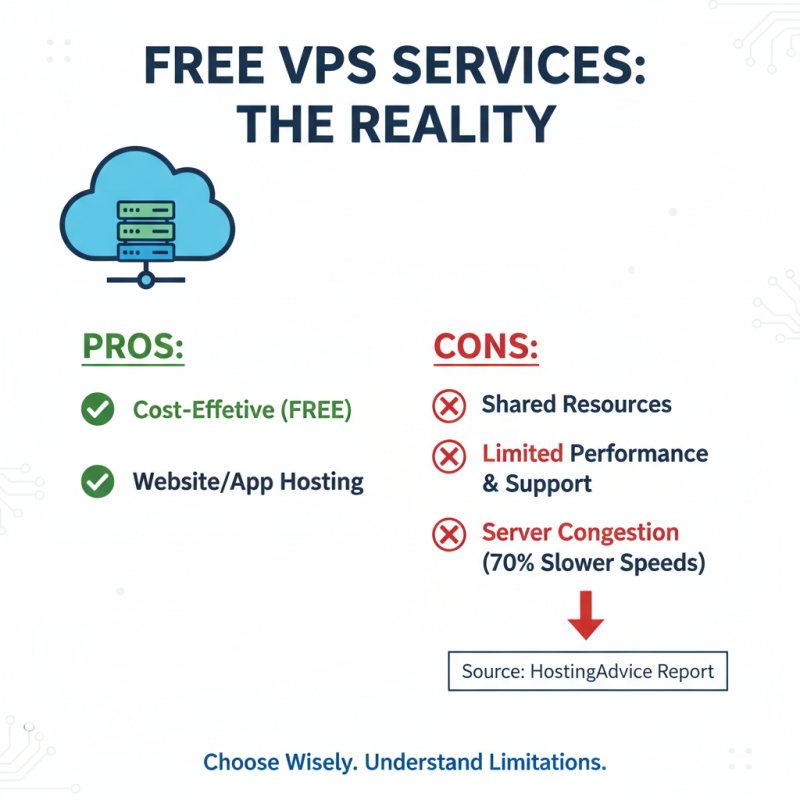
Free VPS services offer cost-effective solutions for users seeking to host websites or applications. They operate on shared resources, providing limited performance and support. According to a report by HostingAdvice, about 70% of users experience slower speeds due to server congestion. It's essential to consider these drawbacks when opting for free services.
These free services often restrict features to maintain their offers. For example, limited bandwidth or storage can hinder growth. A survey by Statista indicates that around 55% of small businesses struggle with insufficient hosting capabilities. Users should reflect on whether these limitations meet their needs. Understanding the operational model is crucial. Users might face ads or restrictions, which can impact the user experience.
Security is another concern. Free VPS providers may not invest heavily in security measures, leaving users vulnerable to attacks. Data breaches can lead to significant losses. A report from Cybersecurity Ventures projected that cybercrime could cost businesses over $10 trillion annually by 2025. Users should weigh these risks against the cost savings to make informed decisions.
Common Limitations of Free VPS Hosting
Free VPS hosting can be an attractive option for startups and personal projects. However, it comes with common limitations that users should consider. One major issue is performance. Free VPS services often lack the resources of paid options. This can lead to slower loading times and lag during peak usage. Users may find their websites unresponsive when traffic increases.
Another limitation is the lack of customer support. Free services often offer minimal or no support at all. Users may struggle to resolve issues quickly. This can lead to downtimes that affect business operations or personal projects. Moreover, many free VPS services impose restrictions on bandwidth and storage. This can limit the growth potential of your site.
Additionally, security can be a concern. Free VPS hosts may not provide robust security features. This leaves your data vulnerable to cyber threats. Users might feel uneasy about relying on a free service for sensitive information. While free VPS hosting has its perks, it’s crucial to weigh these limitations carefully.
Usage Statistics of Free VPS Hosting Services
Alternatives to Free VPS Solutions
When exploring alternatives to free VPS solutions, users often face limitations. Free VPS options usually come with restricted resources. For example, a recent report by Hosting Tribunal indicates that around 70% of free VPS services do not offer adequate uptime. This makes them unsuitable for critical applications. You may find yourself dealing with slow load times or frequent downtimes.
Consider affordable cloud hosting as a viable alternative. Cloud solutions provide reliable uptime, usually around 99.9%. According to a survey from Clutch, 64% of businesses that switched found improved performance. While costs may vary, investments often lead to better scalability. Users reported more control over server resources, which enhances site performance.
Another alternative is shared hosting. Many believe shared hosting lacks power. However, for smaller projects, it can be cost-effective. Research shows that 50% of small businesses find shared hosting sufficient. The key is understanding your needs. What works for one may not work for another. Reflect on what your project requires before making a decision.
What is VPS Free and How Does It Work? - Alternatives to Free VPS Solutions
| VPS Features |
Free VPS Solutions |
Paid VPS Alternatives |
| Resource Allocation |
Limited CPU and RAM |
Enhanced CPU and RAM |
| Uptime |
Variable uptime; may lead to downtimes |
Guaranteed uptime; SLA provided |
| Support |
Community support only |
24/7 customer support |
| Customization |
Limited customization options |
Full control over server configuration |
| Security |
Basic security measures |
Advanced security features and firewall |
| Scalability |
Low scalability |
High scalability options available |